

Hidden Dangers of Low Tire Pressure: Protect Your Hyundai and Stay Safe on NC Roads

May 18th, 2026 by


You’re cruising down Concord Parkway toward the Charlotte Motor Speedway when that familiar amber horseshoe symbol illuminates on your dashboard. It’s the Tire Pressure Monitoring System (TPMS) alert, a signal often ignored by drivers who assume they can ‘just make it home.’ However, the reality is far more precarious. While your Hyundai is engineered with world-class safety systems, those systems rely entirely on the four palm-sized patches of rubber making contact with the asphalt. Driving with under-inflated tires isn’t just a maintenance oversight; it is a fundamental compromise of your vehicle’s stability, braking capabilities, and structural integrity.

The ‘hidden’ danger of low tire pressure isn’t always a flat tire—it is the catastrophic heat buildup that occurs within the tire’s internal layers. When a tire lacks sufficient air, the sidewalls flex excessively under the weight of the vehicle. This constant flexing generates friction at a molecular level, causing temperatures to skyrocket within the rubber compounds. By the time you feel a vibration or smell burning rubber, the tire’s internal structure may already be disintegrating. In this guide, our experts at Modern Hyundai of Concord will explain why the ‘wait and see’ approach is a gamble you cannot afford to take on North Carolina’s high-speed interchanges.


The Physics of Under-Inflation: Heat, Friction, and Structural Failure


To understand the danger, we must look at the mechanics of a tire. A tire is not just a rubber donut; it is a complex assembly of steel belts, fabric plies, and chemical compounds designed to operate within a specific pressure range. When air pressure drops, the tire’s ‘footprint’—the area touching the road—deforms. Instead of a uniform oval, the tire flattens out, forcing more of the shoulder and sidewall to bear the vehicle’s weight. This increases rolling resistance, which means your engine has to work harder, but more importantly, it causes the sidewall to undergo ‘hysteresis.’

Hysteresis is the process where energy is lost as heat during the repeated deformation of the rubber. At 65 MPH on I-85, your tires are rotating hundreds of times per minute. If they are under-inflated, they are flexing hundreds of times per minute. This generates localized heat that can exceed 200 degrees Fahrenheit, causing the adhesives that bond the rubber to the internal steel cords to melt. Once these bonds fail, the tire is prone to a sudden, explosive blowout.


Furthermore, a low-pressure tire loses its ‘hoop tension.’ Think of a tire like a pressurized vessel; when it has the correct PSI, the internal air supports the load. When that air is missing, the load is transferred to the tire’s structure. This leads to ‘sidewall wrinkling.’ As the sidewall folds over itself, the internal liner is chewed away by the rim. This damage is often invisible from the outside but makes the tire a ticking time bomb.

At Modern Hyundai of Concord, we frequently see tires that look fine on the exterior but are filled with ‘rubber dust’ on the inside—a clear sign that the tire was driven while flat or severely under-inflated. This internal degradation is irreversible. If you suspect your tires are low, it is vital to schedule vehicle service at Modern Hyundai of Concord before a minor leak becomes a major safety incident.


Recognizing the Warning Signs: Beyond the TPMS Light


Sluggish Handling


If your steering feels ‘heavy’ or ‘squishy’ when making turns near Concord Mills, your tires likely lack the lateral stiffness provided by proper air pressure. This delay in steering response can be critical during emergency maneuvers.


Increased Road Noise


Low tires have a larger contact patch, which creates a distinct ‘whirring’ or ‘flapping’ sound against the pavement. If your cabin suddenly feels louder than usual, it’s time to check your PSI levels.


Visual Sidewall Bulging


Modern radial tires can be deceivingly low without looking ‘flat.’ However, if you notice the sidewalls bulging significantly where they meet the road, you are likely 10-15 PSI below the recommended limit.


Critical Safety Hazards: Blowouts and Loss of Control


The dangers of driving on low tires go far beyond a simple inconvenience. In North Carolina, where heavy spring rains can lead to standing water on the roads, under-inflated tires significantly increase your risk of hydroplaning. The tread channels on a tire are designed to evacuate water; when a tire is under-inflated, the tread ‘collapses’ inward, preventing it from clearing water efficiently. This causes the tire to ride on a thin film of water, leading to a total loss of steering control.

Braking distance is also severely affected. Research shows that vehicles with under-inflated tires require significantly more distance to come to a full stop. At 60 MPH, even a 6-PSI drop can add several car lengths to your stopping distance—the difference between a safe stop and a rear-end collision. Furthermore, the risk of a high-speed blowout is highest when a tire is low. As discussed, the heat buildup weakens the internal structure until it can no longer contain the air, resulting in a sudden decompression that can pull the vehicle violently to one side. If this happens while you’re navigating the curves of NC-49, the results can be devastating.


Don’t Risk a Blowout—Schedule Your Tire Inspection in Concord


Your safety is our top priority. If your TPMS light is on or your car feels unstable, don’t wait for a failure to occur. Our certified technicians will perform a comprehensive pressure check, inspect for leaks, and ensure your tires are in peak condition for the road ahead.


The Hidden Costs: Fuel Efficiency and Premature Tire Wear
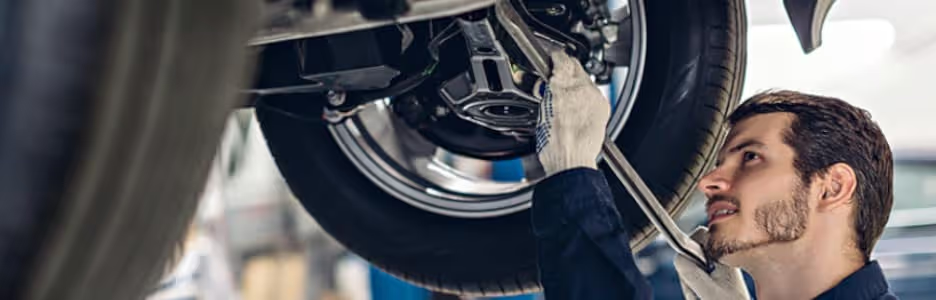
 

Beyond safety, driving with low tire pressure is an expensive habit. When tires are under-inflated, rolling resistance increases dramatically. Imagine trying to ride a bicycle with flat tires—you have to pedal much harder to maintain speed. Your car’s engine faces the same struggle. The Department of Energy estimates that for every 1 PSI drop in all four tires, fuel economy can drop by 0.2%. For a driver commuting from Mooresville to Concord daily, this adds up to hundreds of dollars in wasted fuel annually.

Even more costly is the premature wear of the tires themselves. Under-inflation causes ‘shoulder wear,’ where the outer edges of the tread wear down while the center remains deep. This uneven wear pattern ruins the tire’s performance and forces you to replace your tires much sooner than necessary. A set of quality tires should last 50,000 to 60,000 miles, but consistent under-inflation can cut that life in half. If you’re looking to save, new vehicles for sale at Modern Hyundai of Concord often come equipped with the latest TPMS technology to help you monitor this, but maintaining your current set is the best way to keep your ownership costs low.


Understanding PSI: Manufacturer Recommendations vs. Tire Sidewall Max


The Door Jamb Sticker


The ‘Golden Rule’ of tire pressure is found on the driver-side door jamb. This sticker lists the exact PSI required for your specific Hyundai model to ensure the best balance of safety, comfort, and fuel economy.


The Sidewall ‘Max’


NEVER inflate your tires to the pressure listed on the tire sidewall. That is the maximum pressure the tire can hold at full load, not the recommended daily operating pressure for your vehicle’s weight and suspension.


Cold vs. Hot PSI


Always check your pressure ‘cold’—meaning the car has been parked for at least three hours or driven less than a mile. Driving generates heat, which increases air pressure and gives you a false high reading.


North Carolina Climate Factors: How Concord Weather Affects Your Tires
 

Living in the Piedmont means dealing with significant temperature swings. In Concord, it is not uncommon to have a 70-degree afternoon followed by a 35-degree morning. This has a direct impact on your tires due to the laws of physics: air contracts when it cools. For every 10-degree drop in outside temperature, your tires can lose approximately 1 to 2 PSI.

This is why many drivers in Charlotte and Gastonia see their TPMS light come on during the first cold snap of autumn or a surprise spring frost. If you haven’t checked your tires since the hot summer months, they are almost certainly under-inflated by the time winter rolls around. Conversely, over-inflating in the winter can lead to dangerously high pressures when the North Carolina summer heat hits. Consistent monitoring during seasonal shifts is essential for maintaining the ‘Modern Difference’ in vehicle performance.


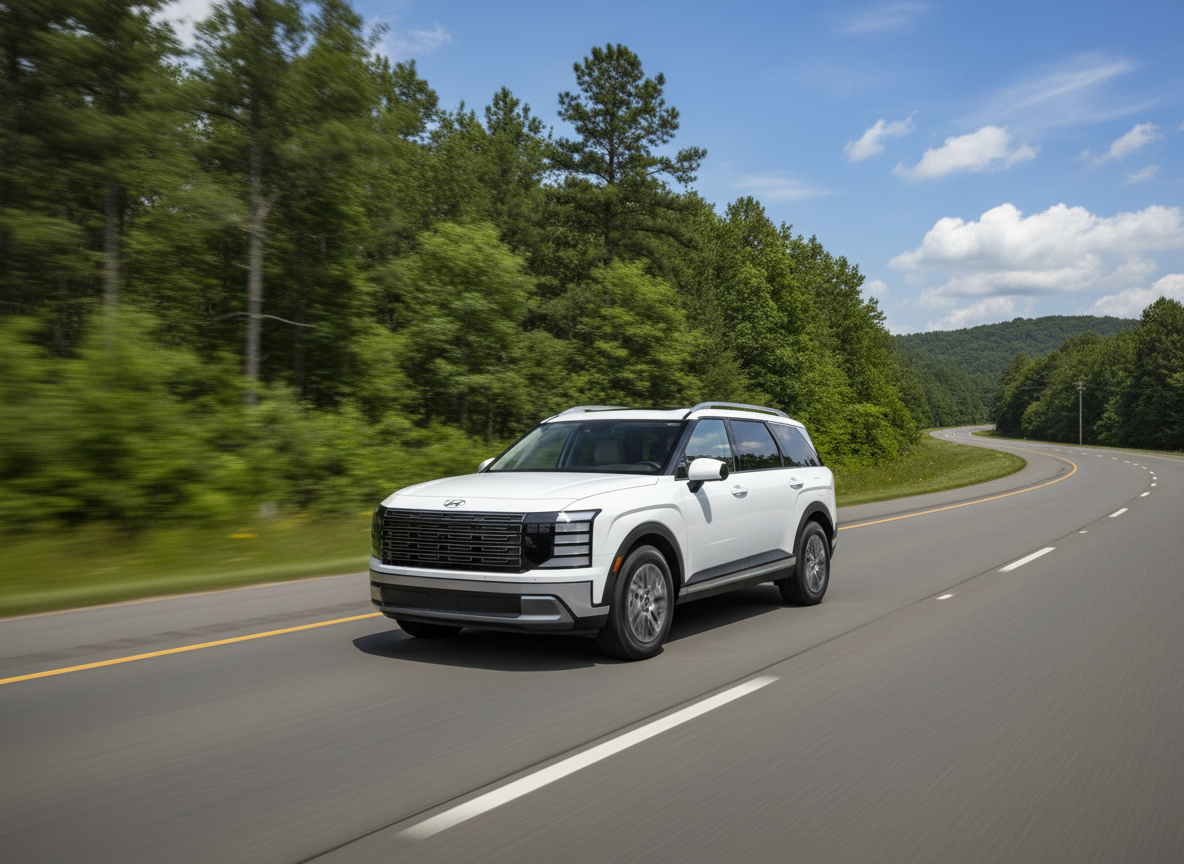
White Hyundai car driving on highway through green trees.

The 5-Minute Safety Check: A Step-by-Step Guide to Proper Inflation


Checking your tire pressure is one of the easiest ways to ensure your safety. Follow these steps once a month:

1. Locate your PSI: Check the driver’s side door jamb for the recommended pressure.
2. Use a Reliable Gauge: Digital gauges are often more accurate than the ‘pencil’ style gauges found at gas stations.
3. Remove the Valve Cap: Unscrew the cap and press the gauge firmly onto the valve stem. You should hear a brief hiss of air.
4. Read the Gauge: Compare the reading to your door jamb sticker. If it’s low, add air in small bursts.
5. Re-Check: Always re-check with the gauge after adding air to ensure you haven’t over-inflated.
6. Don’t Forget the Spare: Check your spare tire pressure twice a year. There’s nothing worse than having a flat only to find your spare is flat too!

If you find yourself constantly adding air to one specific tire, you likely have a slow leak from a nail or a failing valve stem. Bring it to us, and we’ll help you schedule vehicle service at Modern Hyundai of Concord to get it patched or replaced professionally.


Upgrade Your Safety Kit: Genuine Hyundai Tire Accessories


Be prepared for anything. From high-accuracy digital gauges to Hyundai-approved portable air compressors, our parts department has everything you need to keep your tires in check.


Identifying Unrepairable Damage: Sidewall Stress and Rim Exposure


Sidewall Cuts


Punctures in the tread can often be patched, but any damage to the sidewall is an automatic ‘no-repair’ zone. The sidewall supports the weight, and a patch there will not hold.


Run-Flat Ring


If you see a dark ring or ‘heat discoloration’ around the circumference of the sidewall, the tire has been run while flat. This means the internal structure is toasted and unsafe.


Exposed Cords


If you can see metal wires or fabric through the rubber, the tire is at immediate risk of failure. Stop driving immediately and call for assistance or a tow to our service center.


Modern Hyundai of Concord: Your Trusted Local Tire Experts


There are many reasons customers in the Charlotte, Mooresville, Gastonia & Cornelius area choose to do business with Modern Hyundai of Concord. We sum it up by calling it the Modern Difference. From taking our time to ensure our customers have the best car buying experience when choosing a new Hyundai model, to making sure each of our clients obtain the car loan and Hyundai lease that he/she is most comfortable with, our commitment to you is unsurpassed.

Our onsite car service and maintenance center is staffed by highly trained technicians who use certified parts from the manufacturer. We understand the specific load indices and speed ratings required for every Hyundai model, from the electric IONIQ 5 to the robust Palisade. We service all makes and models and are located just 5 minutes from the Charlotte Motor Speedway, making it a convenient stop for drivers from Cornelius and beyond.


Whether you need a simple pressure check, a tire rotation, or a full set of new tires, we offer competitive pricing and the peace of mind that comes with expert installation. If you’re considering a trade-in because your current vehicle’s maintenance is piling up, you can value your vehicle trade-in at Modern Hyundai of Concord today. We also include our very own Modern Care Package with every new vehicle, covering everything from oil changes to inspections.


Common Tire Pressure Myths and FAQs


Q: Can I drive 10 miles on a low tire?
A: It depends on HOW low. If it’s just a few PSI below recommended, you can safely drive to the nearest service station. If the tire is visually flat or the rim is touching the rubber, driving even 100 yards can cause permanent internal damage to the tire structure.

Q: Do tires lose air naturally?
A: Yes. Tires are slightly porous and can lose 1-2 PSI per month naturally. This is why checking them monthly is a standard maintenance requirement, even if you don’t have a puncture.

Q: Is it okay if only one tire is low?
A: No. Uneven tire pressure creates an imbalance in the vehicle’s handling. It can cause the car to pull to one side during braking and interferes with the operation of the Anti-lock Braking System (ABS) and Electronic Stability Control (ESC).

Q: Can I use nitrogen instead of air?
A: Nitrogen molecules are larger than oxygen molecules, so they leak out more slowly. It also contains less moisture, leading to more stable pressures. While not mandatory, it is a great option for NC drivers who want to minimize pressure fluctuations.


Drive Safely in Concord—Visit Us for a Tire Safety Check Today

Posted in Hyundai Service